
How a Gen Z Movement and Military Defection Toppled a President
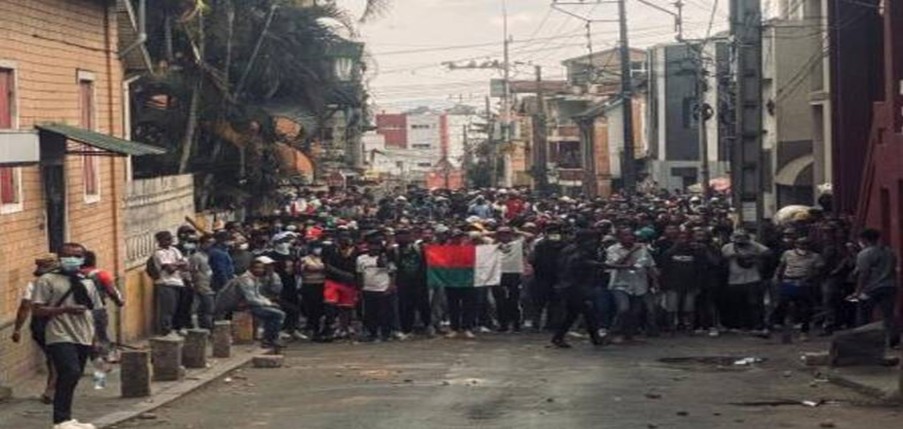
The island nation of Madagascar has witnessed another political upheaval, but this time with a distinct pattern. When President Andry Rajoelina fled the country on October 13, 2025, the force behind his exit was not external pressure or opposition elites. It was the same military unit that once e,jk,43renabled his rise to power.
Background to the Crisis
The crisis began in the everyday realities of Antananarivo. Residents faced persistent blackouts and water shortages that disrupted basic life. By late September, frustration escalated into coordinated protests.
Young citizens, mobilized through social media under the banner “Gen Z Madagascar,” organized demonstrations that quickly expanded across the capital. The movement drew strength from its decentralized structure and clear focus on governance failures.
Political Missteps
President Rajoelina’s dismissal of Prime Minister Christian Ntsay on September 29 failed to ease tensions. Instead, it reinforced public perception of weak accountability. The move was widely interpreted as an attempt to deflect responsibility rather than address systemic issues.
Military Defection
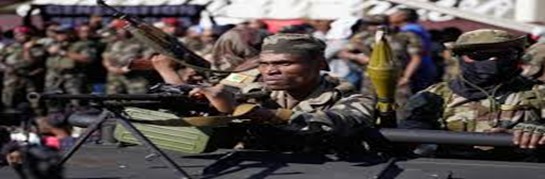
The turning point came on October 11. Soldiers from CAPSAT, an elite military unit, left their barracks and joined protesters in the streets.
This shift carried symbolic weight. CAPSAT had supported Rajoelina during the 2009 political transition. Their defection signaled a collapse of internal loyalty within the regime.
Within hours, the military took control of key institutions, including government buildings and state media. Rajoelina released a brief video citing threats to his life before fleeing to Réunion.
Leadership Transition
Parliament impeached Rajoelina on October 14. Colonel Michael Randrianirina assumed office as interim president three days later.
He rejected the label of a coup, stating that the army was acting in support of the people. Despite this claim, international observers classified the event as an unconstitutional change of government.
International Reaction
- The United Nations issued a formal condemnation
- The African Union suspended Madagascar
- Airlines canceled flights
- Western governments released travel advisories
At least 22 fatalities were reported, though the full extent remains uncertain.

Domestic Perspective
Within Madagascar, reactions were mixed. For many young protesters, the outcome represented a form of accountability. Rajoelina’s administration had increasingly been viewed as disconnected from public needs.
A Broader Pattern
Madagascar’s experience reflects a wider trend. Across several countries, youth-led protests are intersecting with military intervention.
“The army is just showing the Malagasy people that we still exist.”
Scholars have begun to describe such events as “coupvolutions,” where civilian resistance and military action converge to reshape political authority.
What Comes Next
The interim government has announced plans for elections within two years. A new prime minister, Herintsalama Rajaonarivelo, has been appointed.
- Can a credible electoral process emerge under military oversight?
- Will youth movements sustain pressure for reform?
- Can governance failures that triggered the protests be addressed?
As Rajoelina remains in exile, Madagascar stands at a familiar crossroads. October 2025 may represent either a turning point or a continuation of entrenched cycles. The outcome will depend on whether structural reforms follow this moment of disruption.
References
- “2025 Malagasy coup d’état,” Wikipedia
- The Washington Post, October 2025
- NPR, October 2025
- United Nations News, October 2025
- Al Jazeera, October 2025
- Euronews, October 2025